
Negative Ion Generator E2
Negative Ion Generator IG-E2
Lertech's negative ion generator is a product developed to safely supply the human body with a vast number of electrons by using negative ions as electron carriers.
Negative ion generators are not medical devices as defined by the Pharmaceutical and Medical Devices Act. Furthermore, they are not products designed to filter particulates from the air using high-density filters such as HEPA or ULPA, as is the case with air purifiers.
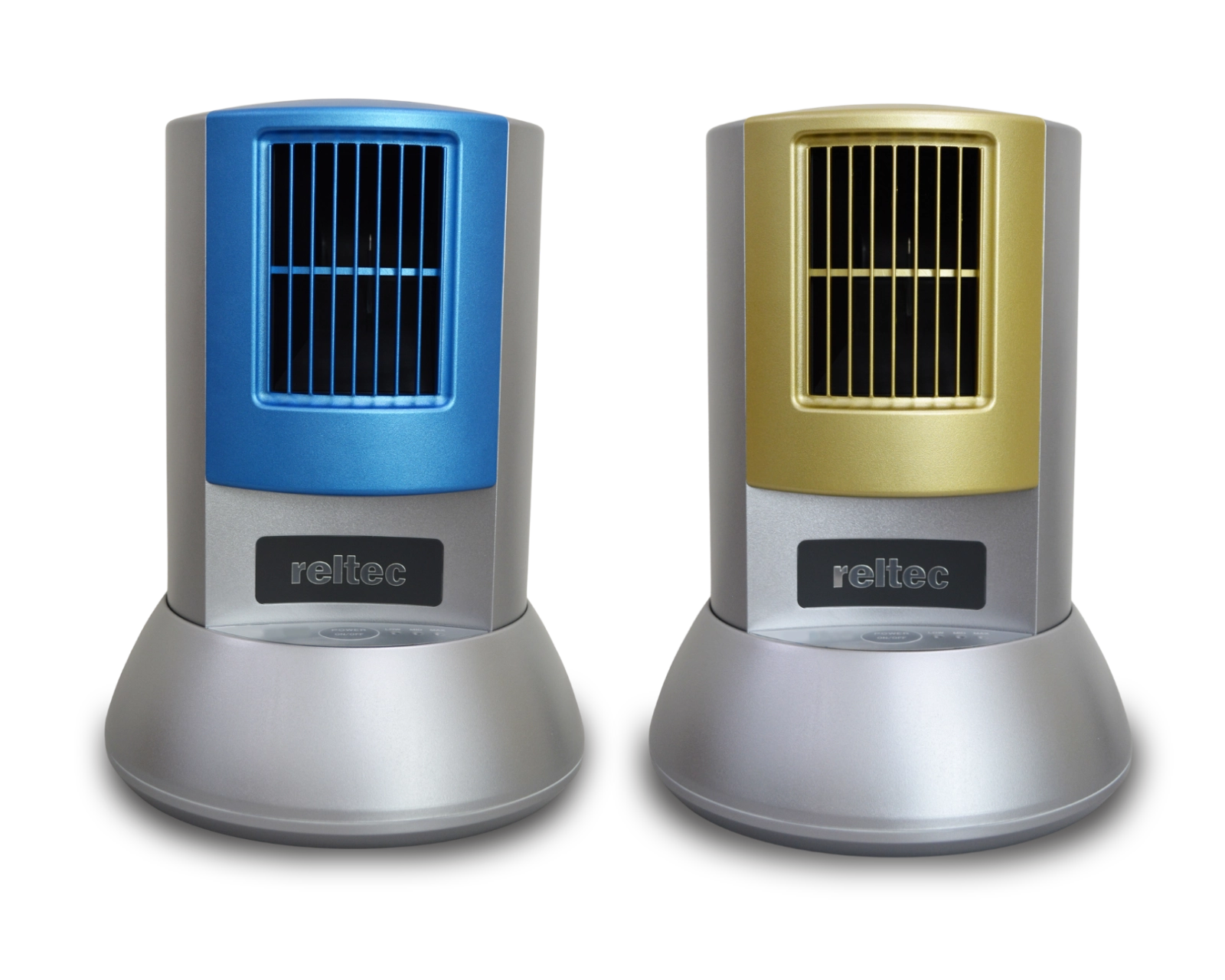

Specifications Overview / Brochure, User Manual
Product Name: IG-E2
Product Contents: Main Unit and Accessories
Weight: Approx. 1.3 kg
Dimensions: Width 196 mm × Depth 180 mm × Height 265 mm
Airflow ( m³/h ): MAX 43, MID 34, LOW 24
Noise Level (dB): MAX 57, MID 53, LOW 47
Power Consumption (W) MAX 7.0, MID 5.5, LOW 4.0
Included Accessories Power cord, AC adapter, activated carbon bag, pre-filter, and more
保証期間 製品出荷日より1年
希望小売価格 ¥143,000(税込)
取扱説明書
It does not emit ozone.
Negative ion generators were developed to supply large amounts of electrons to the human body using negative ions as carriers—in other words, for antioxidant purposes. On the other hand, ozone—which is often generated and released by ion generators along with ions—is a strong oxidizing agent. Ozone damages not only pathogenic microorganisms but also proteins, lipids, and nucleic acids, which are fundamental components of the human body. This is because oxidizing agents do not discriminate between their targets.
By adjusting the discharge energy between the electrodes, Reltech has successfully developed a negative ion generator that does not emit ozone*. This is the negative ion generator.
* Reltech internal testing.Measurements were taken near the air outlet using the “MK Scientific Series-3000” (ozone sensor measurement range: 0–0.15 ppm, resolution: 0.001 ppm, accuracy: ± 0.005 ppm), and no ozone was detected. However, we cannot rule out the possibility of ozone generation depending on the operating environment of the device, such as significantly high levels of air pollution or humidity near the electrodes.
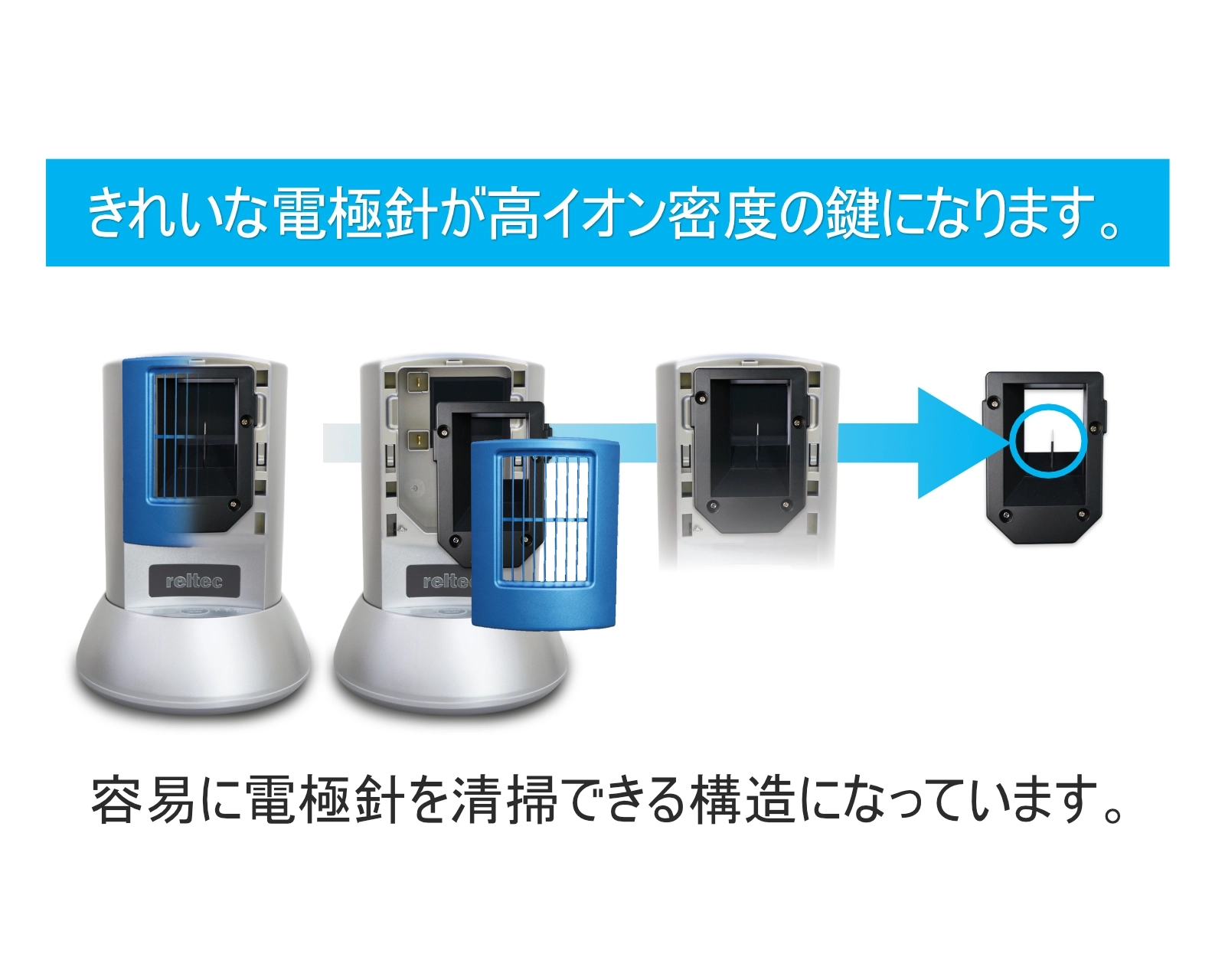
A design that makes it easy to clean the electrode needle
Reltech believes that the most significant factor affecting ion generation density is ensuring that no dust adheres to the electrode needles. This is because dust on the electrode needles reduces the discharge energy and hinders ion generation.
To thoroughly remove dust from the electrode needle, it is essential to use a material that allows for easy dust removal and a device design that is easy to clean; the negative ion generator meets these requirements.
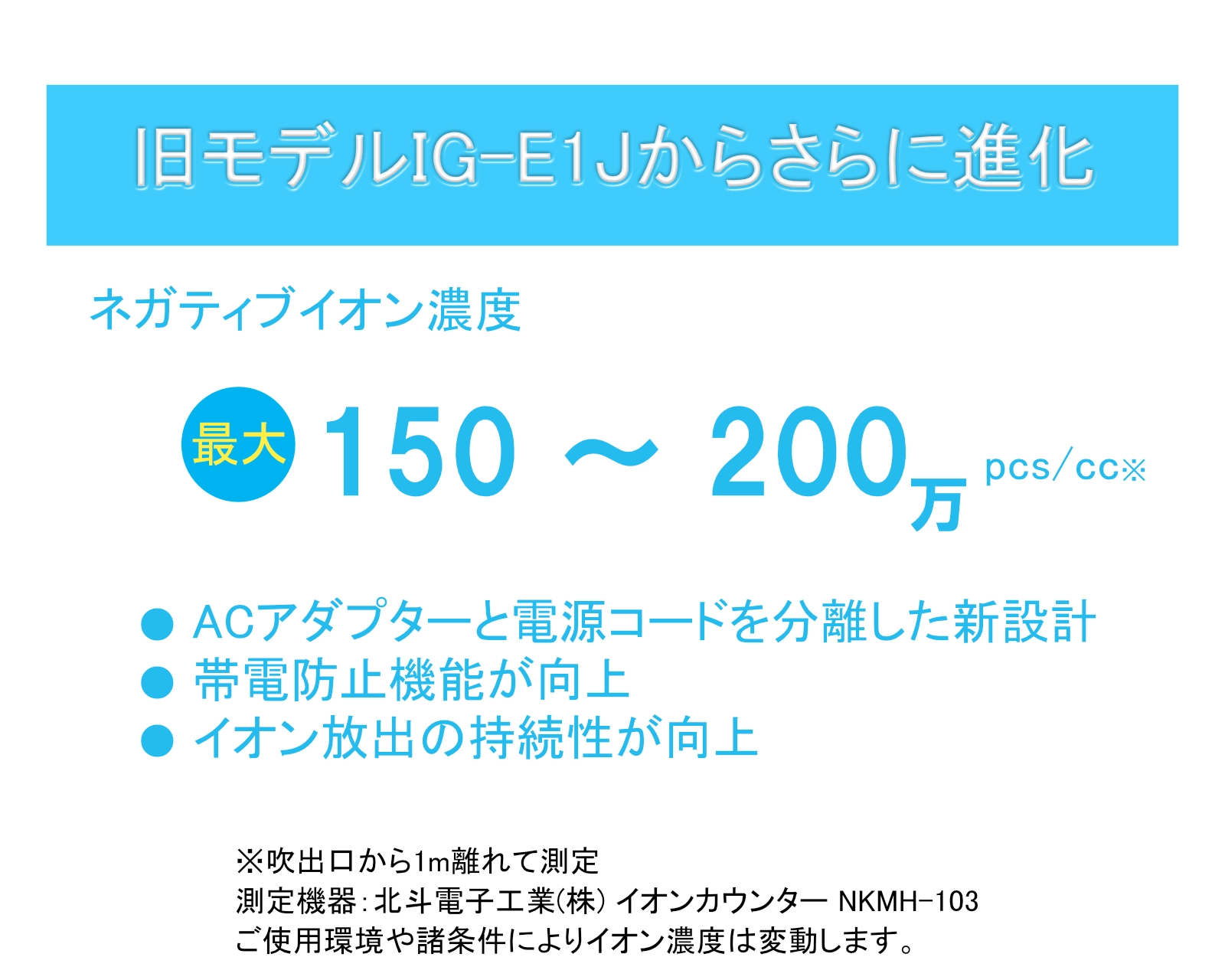
Key Improvements Over the Previous Model, the IG-E1J
Emits a high density of negative ions
The IG-E2 emits 1.5 to 2 million negative ions per cubic centimeter*. This negative ion density far exceeds that found in waterfalls and forests—environments known for promoting relaxation and a sense of refreshment due to their high concentration of negative ions.
* Reltech internal testing. Results measured using the “Hokuto Electronics Co., Ltd. Ion Counter NKMH-103” at a distance of 1 meter from the air outlet. Please note that measurement results may vary depending on the operating environment of the device.
Releases negative ions continuously over a long period of time
In response to customer requests to keep indoor air quality optimal by running a negative ion generator continuously, we developed a product capable of sustained negative ion emission. Even after more than six months of continuous operation without ever being turned off, the negative ion generator continued to emit approximately 1 million negative ions per cubic centimeter*.
* Reltech’s in-house IG-E1J continuous operation test. Ion density was measured using the “Hokuto Electronics Industry Co., Ltd. Ion Counter NKMH-103” at a distance of 1 m from the air outlet; the results were recorded on a data logger and analyzed. Please note that measurement results may vary depending on the operating environment of the device.
It is not difficult to generate and release high-density negative ions for a short period of time. However, if negative ions are generated continuously, the negative ion generator becomes charged, which hinders the generation of negative ions and gradually reduces the number released; preventing this is not easy.
In light of this issue, the IG-E2 underwent a structural redesign. By adopting a design that separates the AC adapter from the power cord, its antistatic performance has been improved compared to the previous model, the IG-E1J. Furthermore, by applying a coating to the main unit that resists static buildup, the device’s ability to sustain negative ion emission has been enhanced.
As a result, the IG-E2 has evolved into a negative ion generator capable of continuously and stably emitting high concentrations of negative ions.